Nonprofit Financial Reporting: A Practical Guide to Accurate Reports

Nonprofit organizations need accurate financial information to manage programs, demonstrate accountability, meet reporting obligations, and make informed decisions. Donors, grantmakers, board members, executives, and other stakeholders may need to understand how an organization receives money, manages expenses, and uses its resources to support its mission.
Nonprofit financial reporting involves much more than just recording income and expenses. It includes reconciling accounts, monitoring budgets, tracking grants and donor restrictions, and preparing reports that explain the organization’s financial position. A consistent process helps leaders identify risks, evaluate program spending, and communicate financial results clearly.
What is Nonprofit Financial Reporting?
Nonprofit financial reporting is the process of collecting, organizing, reviewing, and presenting financial information about an organization’s resources, obligations, income, expenses, and financial position. Internal reports help management monitor budgets and programs. External reports may be prepared for donors, grantmakers, lenders, auditors, regulators, and other stakeholders.
For U.S. nonprofits preparing financial statements under Generally Accepted Accounting Principles (GAAP), applicable guidance generally comes from the Financial Accounting Standards Board, including Topic 958 for not-for-profit entities. Reporting obligations vary by organization, funding agreement, and applicable law.
Why is Financial Reporting important for Nonprofits?
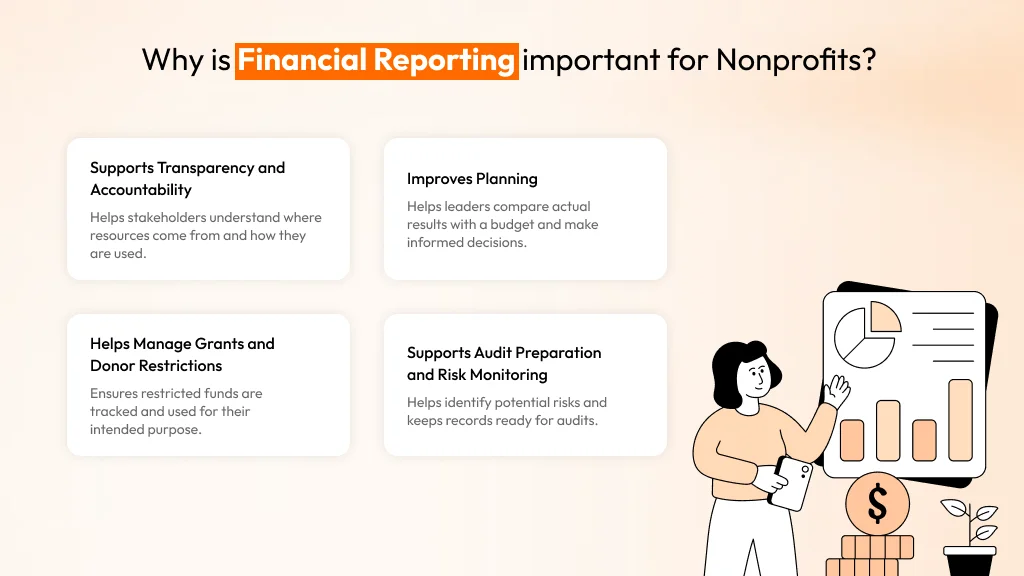
Supports transparency and accountability
Clear reports help stakeholders understand where resources come from, how they are used, and what remains available. Transparency supports board oversight and responsible decision-making, although reports alone do not guarantee donor trust or funding.
Improves planning
Comparing actual revenue and expenses with a budget helps leaders identify unexpected costs, delayed income, and potential shortfalls. If a program spends more than planned, management can investigate the cause and adjust forecasts or spending plans.
Helps manage grants and donor restrictions
Some grants and contributions are limited to a particular purpose or period. Organizations should retain grant agreements, document restrictions, and track relevant activity so they can demonstrate how funds were managed. See the related guide to [restricted grants for nonprofits](https://www.cougarmtn.com/blog/what-is-a-restricted-grant-and-how-to-handle-it-a-nonprofit-guide/).
Supports audit preparation and risk monitoring
Reconciled accounts, organized supporting documents, and documented accounting policies can help nonprofits respond to audit or review requests. Regular reporting can also reveal falling revenue, rising expenses, overdue receivables, or cash-flow pressures. Audit requirements vary, and good records do not guarantee a particular audit result.
Key financial reports for Nonprofits
Statement of financial position
This report shows assets, liabilities, and net assets at a specific date. It helps readers understand what the organization owns or controls, what it owes, and the resources remaining after liabilities.
Statement of activities
This report summarizes revenues, expenses, gains, losses, and changes in net assets over a period. It helps explain how the organization’s financial position changed.
Statement of cash flows
This report summarizes cash inflows and outflows, commonly grouped into operating, investing, and financing activities. It is useful because reported revenue does not always mean cash has already been received.
Budget-versus-actual and grant reports
Budget-versus-actual reports comp are plans with results and help explain variances. Grant and fund reports track activity related to awards, programs, and funding purposes. Follow the reporting format and deadlines in each grant agreement.
Formal financial statements commonly include notes that explain significant accounting policies and other disclosures required by applicable standards.
How to prepare accurate Nonprofit Financial Reports
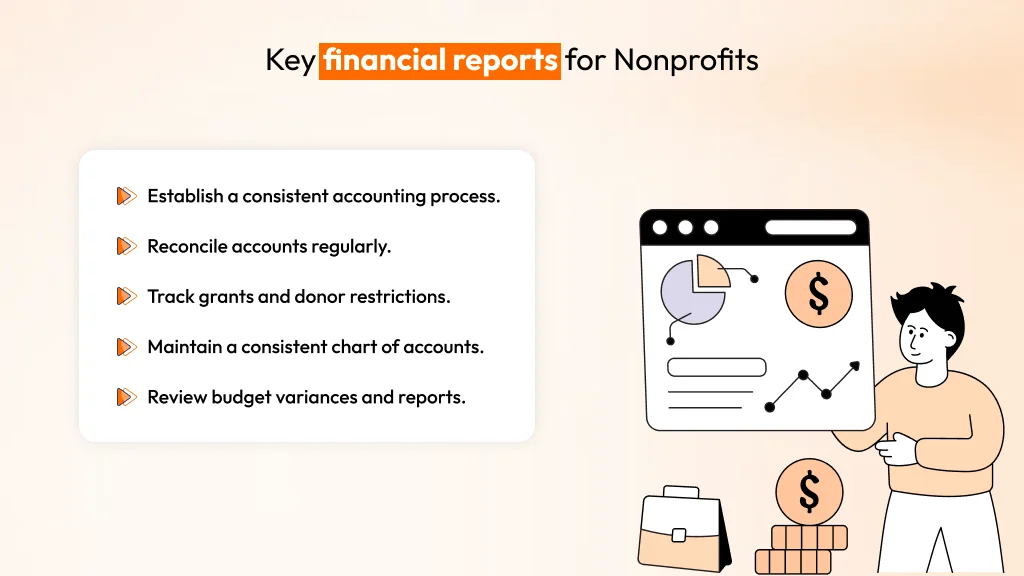
1. Establish a consistent accounting process
Document how transactions are recorded, who approves payments, which account codes to use, and who reviews reports. Assign clear responsibilities for data entry, reconciliations, and reporting.
2. Reconcile accounts regularly
Compare accounting records with bank statements, payment processors, payroll records, receivables, payables, and supporting documents. Investigate differences promptly and retain evidence of review.
3. Track grants and donor restrictions
Keep agreements, amendments, donor correspondence, budgets, invoices, and deadlines organized. The accounting treatment of a grant depends on its terms and applicable accounting guidance, so consult a qualified accountant when uncertain.
4. Maintain a consistent chart of accounts
Use a clear structure for classifying transactions. Where useful, track activity by program, department, location, or grant so reports can be prepared without relying on disconnected spreadsheets.
5. Review budget variances and reports
Investigate material differences between actual results and the budget. Before distributing reports, confirm that balances reconcile, unusual transactions are explained, restrictions are tracked appropriately, and reports cover the correct period.
Understanding restricted and unrestricted Funds
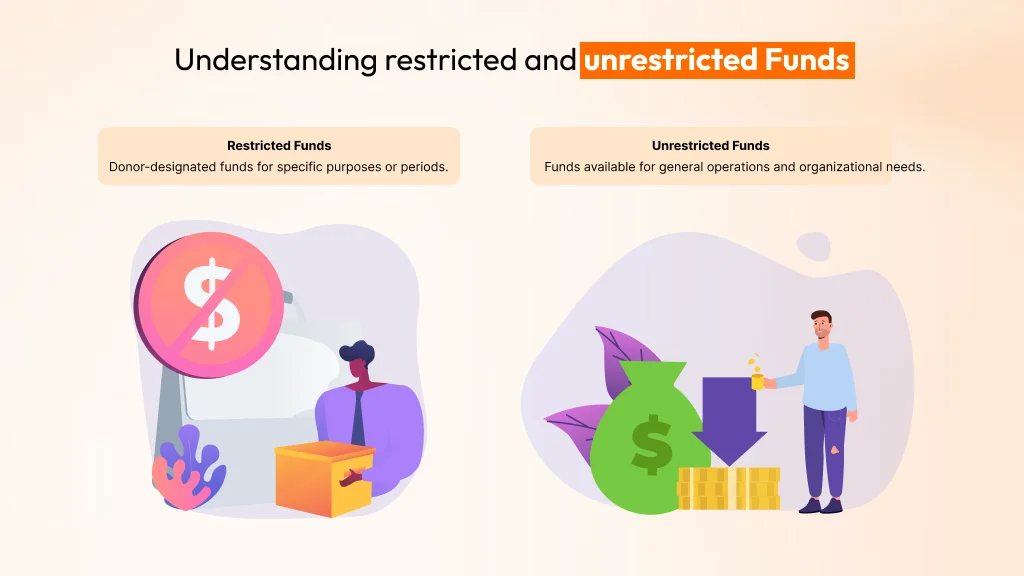
A donor may contribute money for a particular program, equipment purchase, or future period. The nonprofit should retain the donor’s terms and track relevant activity to demonstrate how resources were managed.
Under U.S. GAAP, net assets are generally presented as with donor restrictions or without donor restrictions. Board-designated resources are generally classified as without donor restrictions because the designation comes from the board rather than the donor. Do not assume every item called a “restricted fund” has the same accounting treatment; the underlying terms and applicable guidance matter.
A reliable tracking process can help finance teams monitor activity and prepare required reports. Read more in our guide to fund tracking for nonprofits.
Common Nonprofit Financial Reporting Challenges
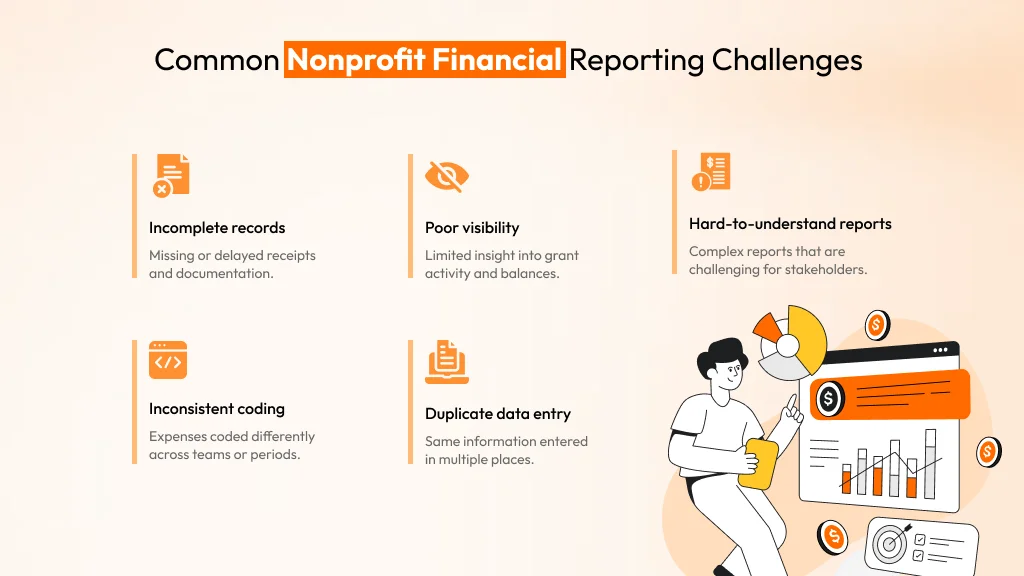
Common challenges include incomplete records, inconsistent expense coding, poor visibility into grant activity, duplicate data entry, and reports that are difficult for stakeholders to understand. Establish clear deadlines for receipts and invoices, maintain a short coding guide, store grant records in a controlled location, and use standard reporting templates.
Create concise summaries for board members and retain supporting schedules for finance staff. Explain significant changes and financial risks in plain language.
How Accounting Software Can Help
Accounting software can centralize transaction records, support reconciliations, track funds or programs, manage access permissions, and generate reports. Capabilities depend on the system and its configuration. Software does not guarantee accurate reporting or GAAP compliance; reliable data, appropriate policies, trained users, and review controls remain essential.
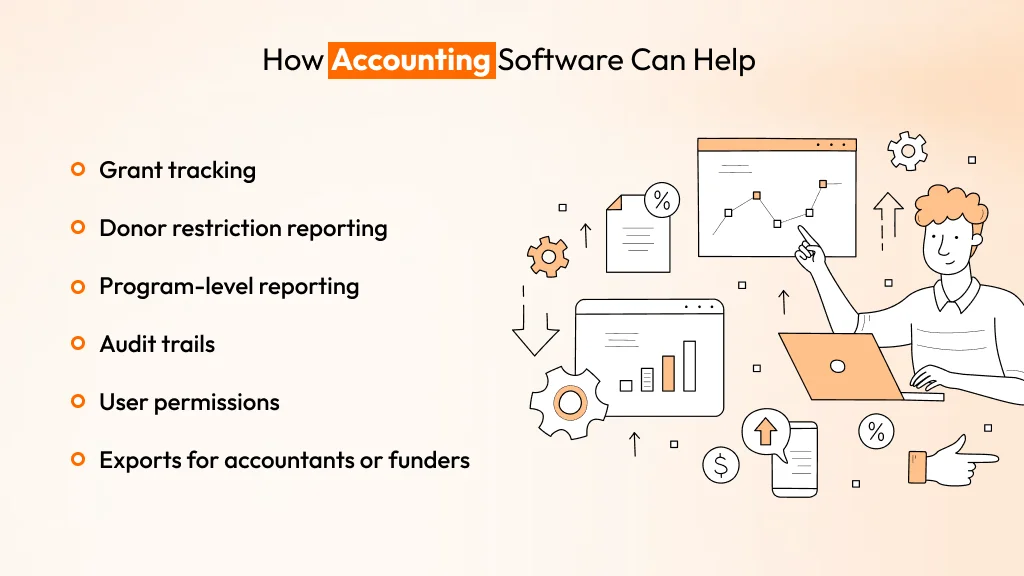
When evaluating a system, check whether it supports grant tracking, donor restriction reporting, program-level reporting, audit trails, user permissions, and exports for accountants or funders. Explore Cougar Mountain Denali Fund and nonprofit software solutions, then confirm current product features with the vendor.
Nonprofit Financial Reporting Checklist
- Confirm applicable internal, external, contractual, and regulatory reporting requirements.
- Keep account codes and coding guidance current.
- Record transactions promptly and retain supporting documents.
- Reconcile bank and key balance-sheet accounts regularly.
- Track grants, donor restrictions, and reporting deadlines.
- Compare actual results with budgets and investigate significant variances.
- Review totals, classifications, and explanations before sharing reports.
- Consult a qualified nonprofit accountant about complex transactions.
Frequently Asked Questions
What is nonprofit financial reporting?
It is the process of preparing and presenting information about an organization’s resources, obligations, revenue, expenses, and financial position.
What financial statements do nonprofits commonly prepare?
A complete set of U.S. GAAP financial statements commonly includes a statement of financial position, statement of activities, statement of cash flows, and notes. Requirements depend on the organization and its circumstances.
How often should nonprofits prepare reports?
Many organizations prepare internal reports monthly and board reports regularly, often quarterly. The right schedule depends on transaction volume, cash needs, grant agreements, and reporting obligations.
Can accounting software eliminate reporting errors?
No. Software can reduce manual work, but errors can still arise from incorrect setup, missing data, coding mistakes, or inadequate review. Strong processes and oversight remain essential.
Conclusion
Accurate nonprofit financial reporting helps organizations understand their financial position, monitor program spending, manage grants, and communicate responsibly with stakeholders. A consistent process built around reconciliations, clear coding, documented restrictions, budget reviews, and appropriate reports can improve decision-making and accountability.
Start by identifying the reports your organization needs, documenting the process for preparing them, and addressing gaps that create delays or uncertainty. If current tools make it difficult to track grants, funds, or programs, evaluate whether a suitable nonprofit accounting system can improve visibility and support reporting requirements.